Curriculum and Clinical Content Development
Science-based insights. Real-world implementation.
Evidence is only valuable when it can be sustainably implemented in practice. Dr. Fulton works with organizations to develop evidence-informed curricula, adapt clinical interventions, and design learning experiences that are practical, engaging, and responsive to the needs of both clients and helping professionals. Her work integrates implementation science, knowledge translation and mobilization, and collaborative program design to support practice changes.
Selected Curriculum Development and Clinical Program Adaptation Projects:
Whether extensive provincial programs or service-specific improvements , these examples demonstrate how evidence can be translated into accessible learning resources and sustainable clinical programs that reflect the realities of diverse settings.

Large Scale Curriculum Development: “The Concurrent Disorders Curriculum”
Building high-quality healthcare education requires collaboration across disciplines, sectors, and lived experience.
As lead writer for the Provincial Concurrent Disorders Curriculum, Dr. Fulton collaborated with executive leaders, Indigenous health experts, people with lived and living experience, family members, subject matter experts, instructional designers, and learning specialists to develop evidence-informed, interactive online learning to support a consistent, evidence-informed approach to concurrent disorders care across diverse settings. The curriculum has been accessed by 1000’s of people worldwide to date.
Highlights: Curriculum Development | Partner Engagement | Interdisciplinary Collaboration | Co-design | Knowledge Translation | Accessible, Scalable Learning Resources.
Register for an account and explore the curriculum: BCMHSUS Centre for Learning.

Provincial Communities of Practice: “Provincial Mental Health and Substance Use ECHO” - HUB Team Member
The Provincial Mental Health and Substance Use ECHO connects helping professionals across British Columbia through collaborative, case-based learning designed to strengthen care for people with complex mental health and substance use health concerns.
As a Hub Team member, Dr. Fulton contributes to program planning, speaker engagement, and session facilitation, helping translate evidence and clinical expertise into practical learning that supports providers across diverse practice settings.
Highlights: Knowledge Translation • Knowledge Mobilization • Interdisciplinary Collaboration • Facilitation • Building Workforce Capacity • Communities of Practice.
Learn more about this project and register for a session here.
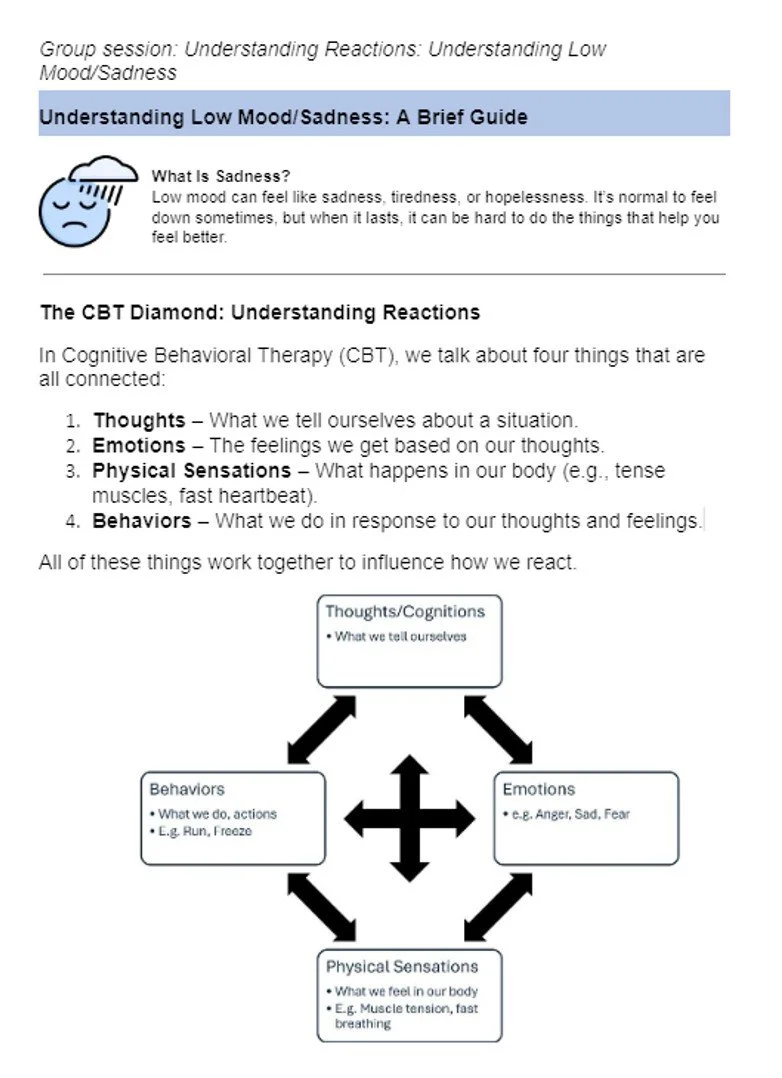
Evidence into Practice: Adapting CBT for Complex Care Settings
Many evidence-based psychological interventions were developed for traditional outpatient therapy and often require adaptation before they can be implemented effectively in complex healthcare settings.
In this project, Dr. Fulton adapted CBT for mood and anxiety into a flexible, stand-alone group curriculum for a bed-based treatment setting for people with complex and severe mental health and substance use disorders. The program maintained the integrity of CBT while accommodating variable lengths of stay, open group enrollment, cognitive diversity (ADHD, autism, acquired brain injuries, learning disabilities), and concurrent mental health and substance use health challenges.
Highlights: Program Development • Implementation Science • Accessibility • Sustainable Service Delivery • Adapting evidence-based interventions
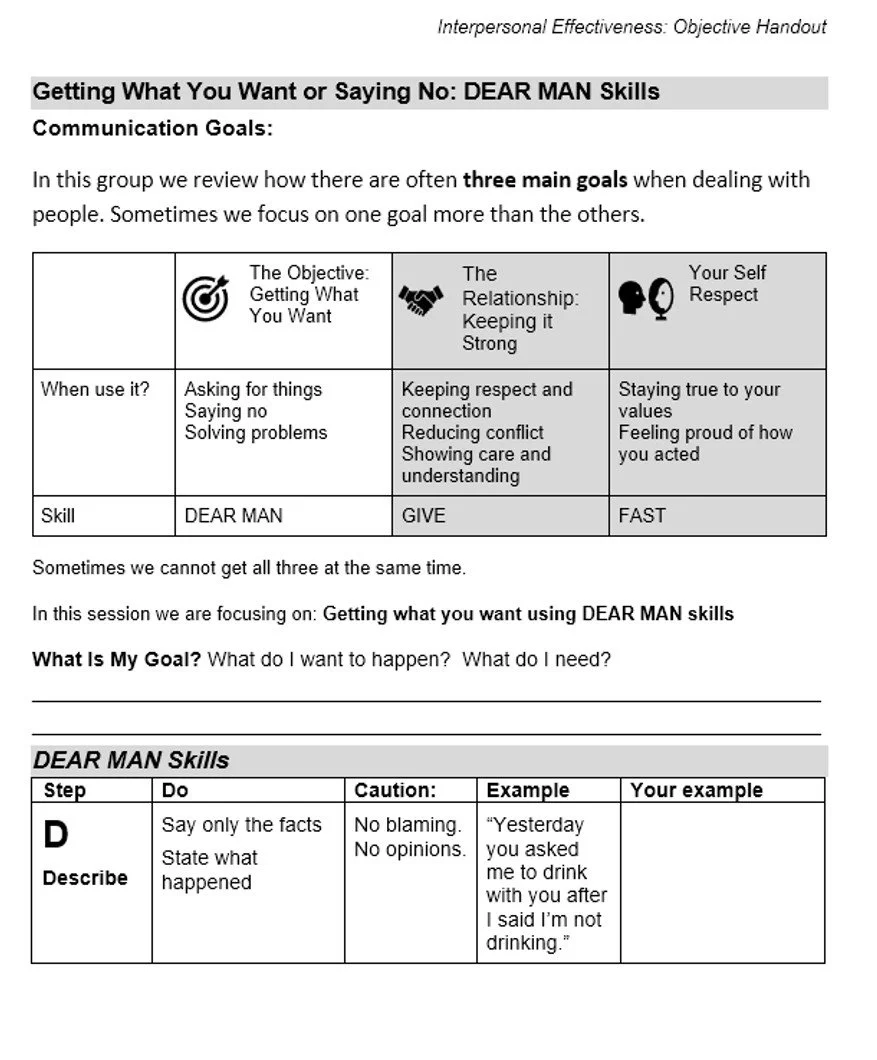
Program Adaptation for Real-World Clinical Settings: “DBT Skills In Action” Group
Dialectical Behaviour Therapy (DBT) is an evidence-based approach designed to treat emotion dysregulation. However, traditional DBT programs often require significant time and resource commitments, staff training and experience, and may not be feasible for all clinical environments.
Working collaboratively with the clinical team, Dr. Fulton redesigned a DBT skills curriculum for an inpatient mental health and substance use program serving youth and young adults. The adapted curriculum maintained fidelity to core DBT principles while accommodating brief lengths of stay, diverse cognitive and learning needs, neurodivergence, and the complexity of concurrent mental health and substance use health concerns.
Highlights: Program Development • Implementation Science • Accessibility • Sustainable Service Delivery • Adapting evidence-based interventions
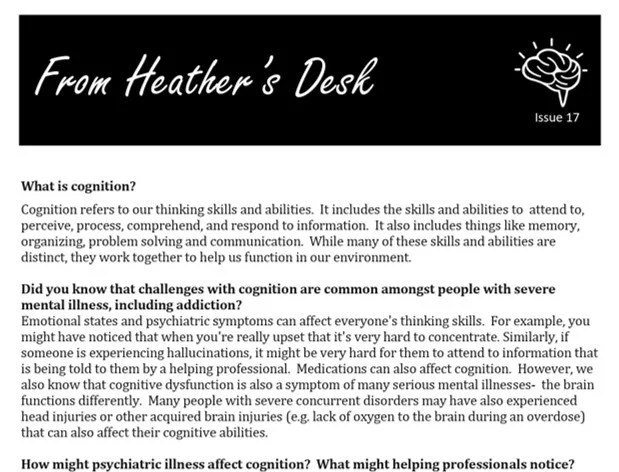
Building Workforce Capacity Through Knowledge Translation: “From Heather’s Desk”
Evidence alone doesn't change practice—people need practical, accessible ways to apply it.
In partnership with a community mental health and housing organization, Dr. Fulton created a series of 37 concise knowledge translation briefs that transformed research and therapeutic concepts into practical strategies for frontline teams supporting people with complex mental health and substance use health concerns. Topics were identified collaboratively with frontline staff and leaders, ensuring the content addressed real-world practice challenges and supported meaningful implementation. In person training followed up and built on more challenging practice areas.
Highlights: Knowledge Translation • Workforce Development • Implementation Science • Sustainable Practice Change

Implementing Trauma Informed Care: “Trauma Informed Practice Tips (TIP Tips)”
Trauma-informed care is most effective when evidence is translated into practical, sustainable changes in everyday practice.
As part of a health authority initiative, Dr. Fulton collaborated with Dr. Heather Baitz and guest writers to develop a series of concise Trauma-Informed Practice (TIP) Tips. These practical resources helped staff apply trauma-informed principles while supporting people with complex mental health and substance use health concerns. TIP tips were short (1-2min) practical suggestions or considerations with the aim to inform helping professionals about trauma informed care, its relevance to work with people experiencing complex concurrent disorders, and practical suggestions for implementation. All TIP tips also aimed to help foster a workplace culture of psychological safety and appreciation by including a unique staff recognition in each update.
Highlights: Knowledge Translation • Implementation Science • Organization Change Management • Workforce Development • Psychological Safety
3 Reasons Why Dr. Fulton is Your Ideal Consultant
-
1. Combination of Science and Practice
Dr. Fulton has a strong background in both research and clinical work. Hiring an expert with both academic and clinical ties ensures that your workforce receives the latest information in evidence-based training. Often it can take years for the latest science to be translated into practice. Dr. Fulton summarizes the latest findings into practical insights and applications that your team can use today.
-
2. Versatile Skills and Background
Dr. Fulton has worked and volunteered in diverse helping settings, from shelters and outreach to specialized hospital and private clinic settings. These experiences enable her to assist a wide range of services and apply evidence-based techniques to diverse, “real life” settings
-
3. Seamless Integration with other Professional Development
Dr. Fulton has undergone multiple certifications and assessments to ensure that her knowledge and skill set in a variety of psychotherapy techniques are at the highest standard. Her expertise in multiple approaches ensures that any training for your staff seamlessly integrates into other science-backed skills and techniques. There is minimal confusion or contradiction. There are opportunities to discuss integration and application of diverse psychosocial approaches.
FAQs
-
I understand that non-profits, start-ups, and independent helping professionals can have diverse budgets and resources available for learning and development. While I typically have pricing similar to the BC Psychological Association’s fee schedule with a rate of of $245/hr, I offer a discount on my hourly rate for larger contracts and I can work on a sliding scale. I will occasionally offer some pro bono services in unique situations. We can develop a plan together to best meet your unique learning needs as well as your training budget.
Contact me for tailored pricing as well as availability for workshops and ongoing consultation projects.
-
I’m a Clinical Psychologist. I trained at Queen’s University and Dalhousie University and completed my doctoral residency at The Royal in Ottawa. My research has always focused on substance use health, particularly on the intersection with mental health. I have presented at local, regional, national and international conferences on leading practices in concurrent disorders.
I am dedicated on ongoing education and reflective practice. For me this has meant getting additional training and certifications at places such as:
• The Beck Institute- specifically in treating substance use disorders
• Certification in CBT from the Canadian Association for Cognitive Behavioral Therapies
• Certification in Seeking Safety- an evidence based approach for treating substance use, trauma, or both
• Recognition as a trainer in Motivational Interviewing through the Motivational Interviewing Network of Trainers and Centre for Collaboration, Motivation, and Innovation.
• Ongoing training in Community Reinforcement and Family Training which includes Level 1 Certification in the Invitation to Change Approach by the Centre for Motivation and Change
• Ongoing training and participation as a Dialectical and Behavior Therapy trainer
• Certification in the Flinders Model of Chronic Disease Management
I am also an Adjunct Professor in the Department of Psychology and a Clinical Instructor in the Department of Psychiatry at the University of British Columbia. I teach and supervise Psychiatry Residents and ClAboutinical Psychology trainees in evidence-based psychotherapies part-time at a local teaching hospital.
Find out more about me in the About section.
-
Most services are offered virtually since this permits Dr. Fulton to work with people and organizations from across BC and Canada. In person training sessions or consultation meetings can be negotiated as part of a contract.
Looking to design or adapt an evidence-based program, develop clinical education, or strengthen implementation? I'd be happy to discuss your project.
Explore Other Professional Services:
-

Individual Professional Consultation
Optimize your clinical practice with personalized professional consultation. Gain valuable insights, refine therapeutic techniques, and overcome challenges through one-on-one sessions with a seasoned clinician. Level up your skills, build confidence and competence. Invest in your professional growth and success today.
-

Professional Development for Helpers
Enhance the skills and expertise of your workforce with engaging, thought-provoking talks, webinars and workshops that encourage people to think differently about complex issues. Cultivate clinical excellence. Elevate productivity and bolster competence and confidence by investing in your team.
-

Psychological Health Education in the Workplace
Enrich your organization with our transformative workplace mental health workshops. Our expert-led sessions cultivate a resilient and empathic work environment, enhancing productivity and employee well-being. Equip your team with invaluable tools to manage stress, build emotional resilience, and drive success. Invest in a healthier, more engaged workforce today.